
“Migoide!” Over the course of a career in global public health, one accumulates experiences that shape not just what you know, but how you see. Field visits, policy engagements, cross-cultural collaborations all add something over time: a new lens, a revised assumption, a deeper appreciation for the complexity of the work. This study abroad program in Mozambique was not a beginning for me. It was a meaningful addition to a body of experience I have been building for some time, and it deepened my thinking in ways I did not fully anticipate when I arrived.
I came to this program with a specific purpose. Mozambique could be where my doctoral research trajectory is headed, and I wanted more than a literature review could offer. I wanted to stand inside the system, meet the people who run it, and understand the country not as a collection of health indicators but as a living, complex, historically layered place. The field visits were the heart of this. Moving through the health system from rural health posts to urban clinics, engaging with community health workers and senior ministry officials alike, offered a panoramic and grounded view of a system that is simultaneously remarkable in its reach and deeply constrained by the structural conditions it operates within. The disparities were visible and sobering, but also legible in a way that only direct experience can make possible. I came to understand, more concretely than before, how colonial history, class, race, and geography intersect in Mozambique to determine who receives care, what quality that care is, and how much agency communities have in shaping the systems that are meant to serve them.
These are themes I have encountered across other contexts in my career. But Mozambique carries its own configuration of these forces, and sitting with that specificity mattered. The legacy of Portuguese colonialism is not a distant historical footnote here. It lives in institutional structures, in urban planning, in the distribution of resources between private and public health infrastructure, and in the subtler dynamics of who holds authority and who defers to whom in professional settings. Racism and class are not comfortable topics in global health spaces, but they are unavoidable ones if the work is to be honest. This program did not shy away from them, and I found that intellectual honesty both refreshing and necessary.
Equity and power dynamics in the global health arena were a constant undercurrent throughout the program. As someone who has occupied various positions within those dynamics over the years, as a recipient of global health programming, as a practitioner, and now as an emerging researcher, I am attuned to the tensions that surface when foreign institutions engage with health systems in low- and middle-income countries. The question of who sets the agenda, whose knowledge is legitimized, and whose priorities ultimately shape resource flows is one I have never been able to set aside, and this program brought it into sharp and specific focus once again. There is an inherent contradiction at the heart of much global health work, where a genuine desire to contribute can sit alongside structural conditions that inadvertently reproduce the very inequities one seeks to address. What made this program exceptional was the way its instructors navigated that contradiction with integrity, self-awareness, and genuine relational depth.
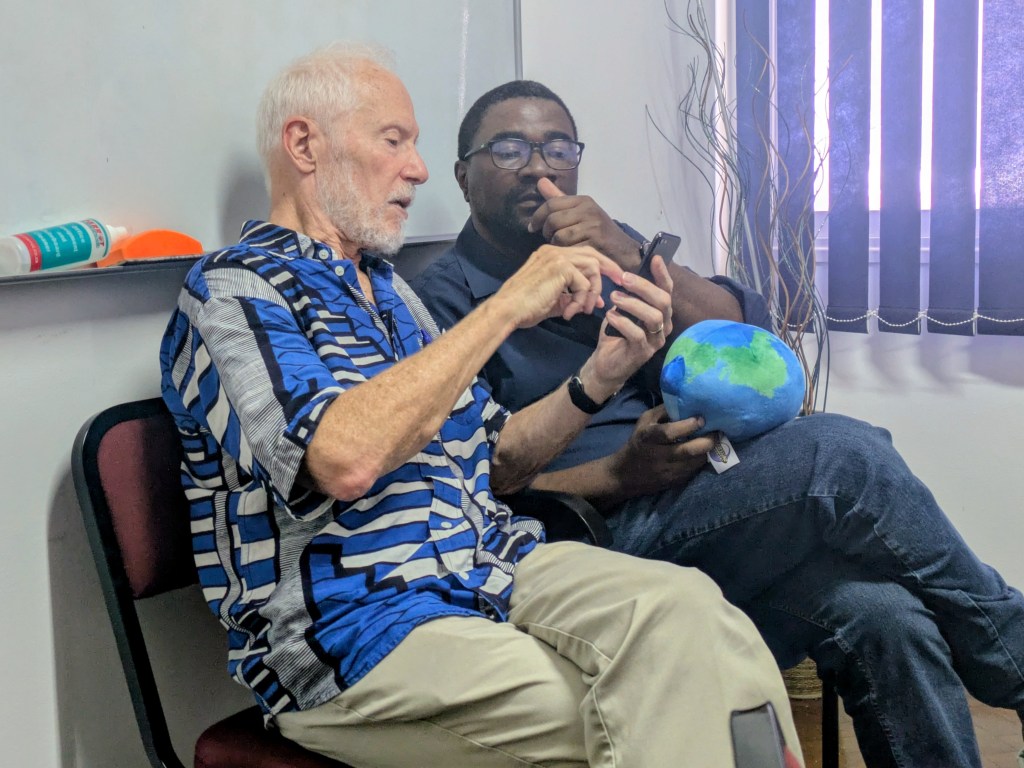
© Rupal Shah-Rohlfs
Professor Steve Gloyd and Dr. Orvalho Augusto did not simply teach this program. They embodied a model of global health engagement that I found both instructive and genuinely moving. Professor Gloyd’s more than 40 years of continuous presence in Mozambique have produced something that cannot be manufactured or accelerated. He brought institutional knowledge, trusted relationships, and a quality of friendship with the country and its people that was felt in every room we entered. People did not receive him as a visiting foreign expert. They received him as someone who had stayed, who had returned year after year, and who had earned his place through consistency, humility, and genuine care. Dr. Augusto brought an equally indispensable dimension to the program. His authority and intellectual grounding as someone who is of Mozambican heritage, who has dedicated his career to understanding and strengthening its health system, gave every engagement a credibility and depth that no outsider could have provided. Together they created a learning environment that was rigorous, human, and deeply relational. For anyone preparing to enter a country as a researcher, watching how they moved through that world was instructive in ways that extended well beyond the formal curriculum.
What I carry most strongly from this experience is a renewed and sharpened sense of what responsible research engagement looks like in a context like Mozambique. The health workers and policymakers we encountered throughout the program, navigating extraordinary constraints with resilience and ingenuity, reminded me that local knowledge and local agency are not resources to be extracted but foundations to be built upon. I leave not with a sense of having arrived at understanding, but with a clearer sense of the kind of researcher I want to become and a more honest appreciation of how much that becoming still requires.
Obrigado!

